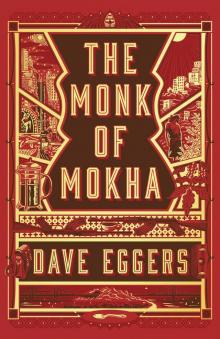
The every, p.1
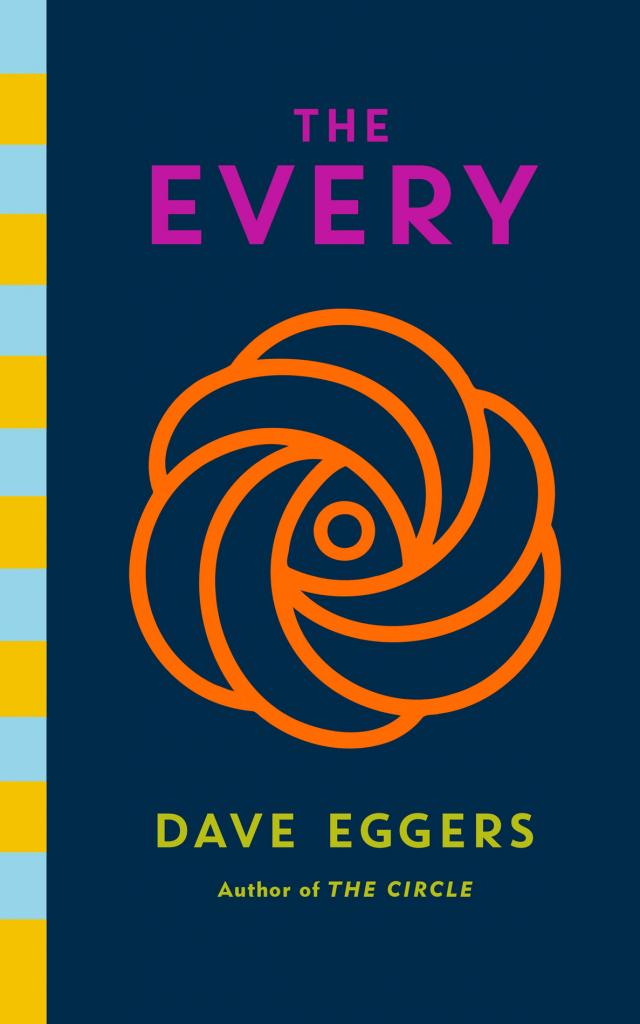
The Every, page 1


Dave Eggers
* * *
THE EVERY
or
AT LAST A SENSE OF ORDER
or
THE FINAL DAYS OF FREE WILL
or
LIMITLESS CHOICE IS KILLING THE WORLD
Contents
Note
Chapter I
Chapter II
Chapter III
Chapter IV
Chapter V
Chapter VI
Chapter VII
Chapter VIII
Chapter IX
Chapter X
Chapter XI
Chapter XII
Chapter XIII
Chapter XIV
Chapter XV
Chapter XVI
Chapter XVII
Chapter XVIII
Chapter XIX
Chapter XX
Chapter XXI
Chapter XXII
Chapter XXIII
Chapter XXIV
Chapter XXV
Chapter XXVI
Chapter XXVII
Chapter XXVIII
Chapter XXIX
Chapter XXX
Chapter XXXI
Chapter XXXII
Chapter XXXIII
Chapter XXXIV
Chapter XXXV
Chapter XXXVI
Chapter XXXVII
Chapter XXXVIII
Chapter XXXIX
Chapter XL
Chapter XLI
Chapter XLII
Chapter XLIII
Chapter XLIV
Chapter XLV
Acknowledgements
About the Author
Dave Eggers is the author of many books, among them The Circle—the companion to the book you are holding—and also The Monk of Mokha, A Hologram for the King, What Is the What, and The Museum of Rain. He is a cofounder of 826 National, a network of youth writing centers, and Voice of Witness, an oral history book series that illuminates the stories of those impacted by human rights crises. He has been a finalist for the Pulitzer Prize, the National Book Award, and the National Book Critics Circle Award, and is the recipient of the Dayton Literary Peace Prize and the American Book Award. He has attended the JetPack Aviation academy in Moorpark, California, but is not yet certified to fly off-tether. Born in Boston and raised in Illinois, he has now lived in the San Francisco Bay Area for three decades. He and his family often consider leaving, but they do not leave.
www.daveeggers.net
ALSO BY DAVE EGGERS
FICTION
The Museum of Rain
The Captain and the Glory
The Parade
Heroes of the Frontier
Your Fathers, Where Are They? And the Prophets, Do They Live Forever?
The Circle
A Hologram for the King What Is the What
How We Are Hungry
You Shall Know Our Velocity!
NONFICTION
The Monk of Mokha
Understanding the Sky
Zeitoun
MEMOIR
A Heartbreaking Work of Staggering Genius
AS EDITOR
Surviving Justice: America’s Wrongfully Convicted and Exonerated (with Dr. Lola Vollen)
The Voice of Witness Reader: Ten Years of Amplifying Unheard Voices
For V
“Give the people a new word, and they think they have a new fact.”
—Willa Cather
“If at first the idea is not absurd, then there is no hope for it.”
—Albert Einstein
“Is there not also, perhaps, besides the innate desire for freedom, an instinctive wish for submission?”
—Erich Fromm
Chapters
WITH READING TIME (APPROX), MATCH % (EXACT), AND AGGREGATE READER SCORE
I. Genesis
II. Charming This Man
III. I Can See You Doing Tapestries
IV. Jennifer Save Me
V. Carlo and Shireen: Measurements of Awe
VI. The Lower Lost
VII. Immaculate Conception
VIII. Why We Can’t Have Things
IX. He Loves Her, She Thanks Him
X. Ocean Rain
XI. To an Athlete Dying Young
XII. Evidence of the Contraction of the Human Soul, pt. 1
XIII. The Way of All Flesh
XIV. Expanding the Sample Set
XV. A Simple Plan
XVI. The Tyranny of Choice
XVII. The Labors of Our Fruit
XVIII. How to Read This Text
XIX. Where Ideas Come From
XX. Where Bad Ideas Come From
XXI. The Longest Day
XXII. Thirteen Ways of Looking
XXIII. To Joan: The Keen Stars Were Twinkling
XXIV. Ode to a Grecian Lamb
XXV. Evidence of the Contraction of the Human Soul, pt. 2
XXVI. Contained and Content
XXVII. Your Whims, Their Suffering
XXVIII. Past Imperfect
XXIX. Speedy End to a Passing Threat
XXX. Upon the Bed of Languishing
XXXI. To the Victor
XXXII. The Gathering Storm
XXXIII. See Me, Hear Me, Save Me
XXXIV. This Is Just to Say
XXXV. The Lunatic Interrogation
XXXVI. The Pinnacles
XXXVII. The Everythrow
XXXVIII. Something Happened
XXXIX. Lady Lazarus
XL. The Habit of Perfection
XLI. Here You Come Again
XLII. Gregory’s Girl
XLIII. Home and Abroad
XLIV. Prometheus Bound
XLV. The Consensual Economic Order
(Freedom from Choice)
I 12 min read 88% match Score: 86.67
II 11 min read 81% match Score: 82.18
III 14 min read 67% match Score: 89.22
IV 66 min read 97% match Score: 61.34
V 81 min read 91% match Score: 71.45
VI 09 min read 34% match Score: 78.91
VII 23 min read 55% match Score: 98.33
VIII 45 min read 28% match Score: 90.12
IX 78 min read 13% match Score: 76.89
X 91 min read 76% match Score: 45.87
XI 10 min read 92% match Score: 41.45
XII 10 min read 83% match Score: 09.18
XIII 10 min read 89% match Score: 14.66
XIV 13 min read 44% match Score: 56.86
XV 32 min read 67% match Score: 42.81
XVI 23 min read 33% match Score: 93.87
XVII 92 min read 39% match Score: 91.65
XVIII 64 min read 46% match Score: 84.02
XIX 32 min read 53% match Score: 86.43
XX 11 min read 94% match Score: 88.12
XXI 07 min read 63% match Score: 90.22
XXII 01 min read 78% match Score: 81.33
XXIII 88 min read 75% match Score: 44.63
XXIV 76 min read 84% match Score: 58.04
XXV 07 min 18% match Score: 01.54
XXVI 12 min 23% match Score: 34.87
XXVII 09 min 98% match Score: 81.77
XXVIII 11 min 91% match Score: 86.08
XXIX 41 min 67% match Score: 45.68
XXX 34 min 34% match Score: 90.67
XXXI 23 min 37% match Score: 45.67
XXXII 07 min 66% match Score: 76.01
XXXIII 08 min 61% match Score: 26.17
XXXIV 76 min 74% match Score: 88.60
XXXV 44 min 71% match Score: 81.41
XXXVI 22 min 80% match Score: 99.67
XXXVII 18 min 76% match Score: 82.27
XXXVIII 12 min 23% match Score: 80.98
XXXIX 56 min 11% match Score: 76.01
XL 12 min 65% match Score: 86.67
XLI 09 min 88% match Score: 67.02
XLII 22 min 91% match Score: 81.98
XLIII 17 min 02% match Score: 34.92
XLIV 23 min 76% match Score: 90.02
XLV 11 min 81% match Score: 88.91
Acks 14 min 76% match Score: 75.81
Note A 10 min 51% match Score: N/A
Note B 88 min 67% match Score: 100.91
NOTE: This story takes place in the near future. Don’t try to work out when. Any anachronisms of time and physics occur on purpose. All errors pertaining to technology, chronology or judgment are intentional and exist to serve you better.
I.
DELANEY EMERGED from the dim subway and into a world of sterling light. The day was clear, and the sun struck the Bay’s numberless waves and threw golden sparks everywhere. Delaney turned away from the water and walked the hundred feet to the Every campus. This alone—taking the subway, making her way to the gate unaccompanied, without a vehicle—made her an anomaly and confused the gate’s two guards standing in their booth. Their domain was glass, pyramidal, like the tip of a crystalline obelisk.
“You walked here?” asked one of the guards. Rowena, by her badge, was maybe thirty, raven-haired and dressed in a crisp yellow top, snug like a bicycle bib. She smiled, revealing an endearing gap between her two front teeth.
Delaney provided her name, and said that she had an interview with Dan Faraday.
“Finger, please?” Rowena asked.
Delaney put her thumb on the scanner and a grid of photos, videos and data appeared on Rowena’s screen. There were pictures of Delaney she hadn’t seen herself—was that a gas station in Montana? In the full-body shots, she was slouching, the burden of her too-tall teenhood. Standing by the booth, Delaney straightened her posture as her eyes wandered over images of he
“You grew your hair out,” Rowena said. “Still short, though.”
Delaney reflexively ran her fingers through her thick black bob.
“Says your eyes are green,” Rowena said. “They look brown. Can you get closer?” Delaney got closer. “Ah! Pretty,” Rowena said. “I’ll call Dan.”
While Rowena was contacting Faraday, another snafu occupied the second guard, a gaunt and sullen man of about fifty. A white van had pulled up, and the driver, a red-bearded man sitting high above the guards’ window, explained that he had a delivery.
“Delivery of what?” the gaunt guard asked.
The driver briefly turned his head toward the back of the van, as if to be sure of his impending description. “It’s a bunch of baskets. Gift baskets. Stuffed animals, chocolate, that kind of thing,” he said.
Now Rowena, whom Delaney assumed was the alpha of the glass obelisk, took over. “How many baskets?” she asked.
“I don’t know. About twenty,” the driver said.
“And is anyone expecting these?” Rowena asked.
“I don’t know. I think it’s for potential clients maybe?” the driver said, a sudden exhaustion in his voice. This was evidently a conversation already far longer than what he was accustomed to. “I think these are just gifts for some people that work here,” he said, and reached to the passenger seat, where he found a tablet and tapped it a few times. “It says these are for Regina Martinez and the Initiative K Team.”
“And who is the sender?” Rowena asked. Her tone, now, was almost amused. It was clear, to Delaney at least, that this particular delivery would not be consummated.
Again the driver consulted his tablet. “It says the sender is something called MDS. Just M-D-S.” Now the driver’s voice had, too, taken on a fatalistic tone. Would it matter, he seemed to wonder, if he even knew what MDS stood for?
Rowena’s face softened. She murmured into a microphone, apparently speaking to a different security phalanx within the Every. “Never mind. I’ve got it. It’s a turnaround.” She tilted her head sympathetically to the driver. “You can turn around just up here.” She pointed to a cul-de-sac fifteen yards ahead.
“So I drop the baskets there?” the driver asked.
Rowena smiled again. “Oh no. We won’t be accepting your …”—the pause seemed meant to allow sufficient venom to accumulate for the next, heretofore benign, word—“baskets.”
The driver raised his hands to heaven. “I’ve been delivering for twenty-two years and no one’s ever refused delivery.” He looked to Delaney, who was still standing next to the booth, as if he might find in her a potential ally. She averted her eyes, resting them upon the campus’s tallest building, an aluminum-clad corkscrew tower that housed Algo Mas, the company’s algorithm thinktank.
“First of all,” Rowena explained, clearly uninterested in the driver’s history of successful delivery, “your cargo doesn’t meet security thresholds. We’d have to X-ray every one of your …”—again she hissed the word—“baskets, and we aren’t prepared to do that. Secondly, the company has a policy whereby we don’t bring unsustainable or improperly sourced goods onto campus. My guess is that those baskets”—somehow she’d made it an epithet—“contain extensive plastic packaging? And processed foods? And factory-farmed fruit without organic or fair-trade certification, all of it no doubt covered with pesticides? Are there nuts in these”—still more venom—“baskets? I’m assuming so, and this campus is nut-free. And you said something about stuffed animals? There’s no way I could let you bring cheap non-biodegradable toys onto campus.”
“You don’t accept non-biodegradable toys?” the driver asked. He had his meaty palm against the dashboard now, as if bracing himself against collapse.
Rowena exhaled loudly. “Sir, I’ve got a few cars behind you now. You can turn around just past the booth.” She pointed to the roundabout that was no doubt busy all day with people, trucks and goods, unwanted by the Every, returning to the unexamined world. The driver stared long at Rowena, and finally put his van into gear and rolled toward the turnaround.
The scene was odd in so many ways, Delaney thought. A non-Every delivery driver in the first place. Five years earlier, the Circle had bought an ecommerce behemoth named after a South American jungle, and the acquisition created the richest company the world had ever known. The subsummation necessitated the Circle changing its name to the Every, which seemed to its founders definitive and inevitable, hinting as it did at ubiquity and equality. The ecommerce giant, too, was happy for a new start. The once-rational, once-dependable online marketplace had been allowed to devolve into a chaotic wasteland of shady vendors, product knockoffs and outright fraud. The company had ceded all control and responsibility, and customers began to peel off; no one loved being cheated or deceived. By the time the site course-corrected, they’d lost the trust of a fickle public. The Circle engineered a stock takeover, and the site’s founder, increasingly distracted by divorces and lawsuits, was only too happy to cash out and devote his time to space exploration with his fourth spouse. They were planning to retire on the Moon.
After the acquisition, a new logo was conjured. Essentially it was three waves crashing around a perfect circle, and hinted at the flow of water, the bursting of new ideas, of interconnectivity, at infinity. Successful or not, it improved upon the Circle’s previous logo, which implied a manhole cover, and easily beat the longtime logo of the ecommerce behemoth, which was an insincere smirk. Because the negotiations had been fraught and finally unfriendly, now that the merger was complete, it was unwise to use the ecommerce company’s previous name on campus; if it was mentioned at all, it was referred to as the jungle, lowercase j intentional.
The Circle had been in nearby San Vincenzo since its inception, but a fortuitous confluence of events brought them to Treasure Island, largely manmade, in the middle of San Francisco Bay—extending from a real island called Yerba Buena. This new landmass was built in 1938, the intended home of a new airport. When WWII broke out, it was converted to a military base, and in the decades since, its patchwork of airplane hangars were slowly converted to maker spaces, wineries, and affordable housing—all with breathtaking views of the Bay, the bridges, the East Bay hills. No developers would touch it, though, given the unknown military (and presumed toxic) waste buried under its abundant concrete. But in the 2010s, speculators finally worked out the mitigation, and glorious plans were drawn up. A new water-port was built, a new subway stop was added, and a four-foot wall was erected around the perimeter for the next few decades’ expected sea-level rise. Then the pandemics struck, capital dried up, and the island was there for the taking. The only catch was California law dictated that access to the waterfront be public. The Every fought this quietly, then publicly, but ultimately lost, and a shoreline perimeter path around the island remained available to anyone who could get there.
“Delaney Wells?”
Delaney spun left to find a man in his early forties standing before her. His head was shaved, and his large brown eyes were magnified by rimless glasses. The collar of his black, zippered shirt was positioned upward, his legs smothered in snug green denim.
“Dan?” she asked.
After the pandemics, handshakes were medically fraught—and, many thought, aggressive—but no one substitute-greeting had been agreed upon. Dan chose to tip an imaginary top hat in Delaney’s direction. Delaney offered a brief bow.
“Should we walk?” he asked, and slipped past her, through the gate. He strolled not into campus but out into the island’s perimeter sidewalk.
Delaney followed. She had heard this was the way of most first interviews at the Every. With humans as with non-biodegradable toys, the Every did not want the unscreened, the unchosen, risking the infection of the campus. Each new person presented a security risk of one kind or another, and given that interviewees like Delaney had no clearances and had not been vetted in any thorough way—not beyond nine or so cursory AI screenings—it was best to conduct the first interview off-campus. But this was not what Dan said.
“I need to get my steps in,” he said instead, pointing to his oval, a ubiquitous bracelet able to track myriad health metrics, made by the Every and required by all insurers and most governments.
“Me too,” Delaney said, and pointed to her own oval, which she loathed with molten fury but which was integral to her disguise.