Desert

Desert

J. M. G. Le Clézio

J. M. G. Le Clézio

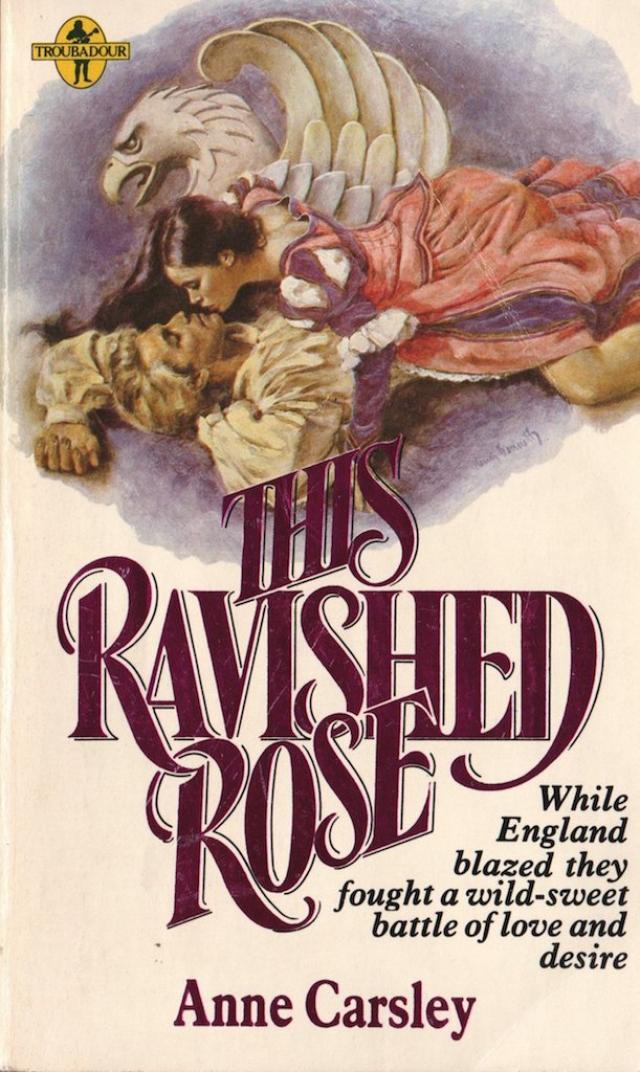
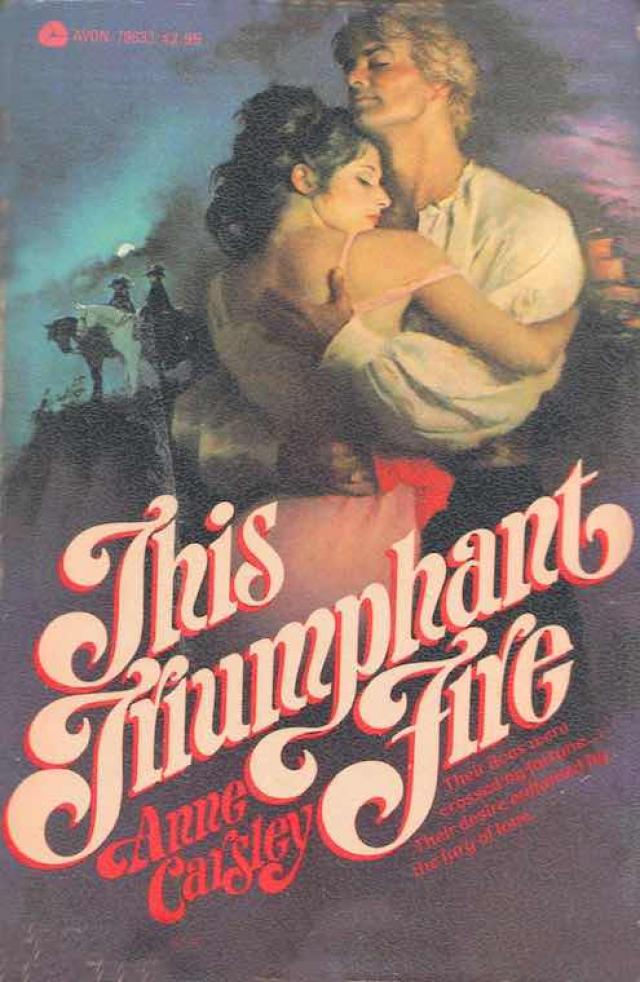
The Swedish Academy, in awarding J.M.G. Le Clézio the 2008 Nobel Prize in Literature, praised Desert as Le Clézio's "definitive breakthrough as a novelist." Published in France in 1980, Desert received the Grand Prix Paul Morand from the Académie Française, was translated into twenty-three languages, and quickly proved to be a best-selling novel in many countries around the world.Available for the first time in English translation, Desert is a novel composed of two alternating narratives, set in counterpoint. The first takes place in the desert between 1909 and 1912 and evokes the migration of a young adolescent boy, Nour, and his people, the Blue Men, notorious warriors of the desert. Driven from their lands by French colonial soldiers, Nour's tribe has come to the valley of the Saguiet El Hamra to seek the aid of the great spiritual leader known as Water of the Eyes. The religious chief sends them out from the holy city of Smara into the desert to travel still further. Spurred on by thirst, hunger, and suffering, Nour's tribe and others flee northward in the hopes of finding a land that can harbor them at last.The second narrative relates the contemporary story of Lalla, a descendant of the Blue Men. Though she is an orphan living in a shantytown known as the Project near a coastal city in Morocco, the blood of her proud, obstinate tribe runs in her veins. All too soon, Lalla must flee to escape a forced marriage with an older, wealthy man. She travels to France, undergoing many trials there, from working as a hotel maid to becoming a highly-paid fashion model, and yet she never betrays the blood of her ancestors.From Publishers WeeklyOne of the few works by 2008 Nobel laureate Le Clézio to be translated into English, this mythic novel tells two parallel stories of descendants of a holy man called Al Azraq. The novel begins with Nour, a Berber boy who bears witness to the failed rebellion led by Sheik Ma el Aïnine against the French in the years leading up to WWI. In the cadences of an incantation, Le Clézio renders the dire suffering of the displaced desert peoples who turn to Ma el Aïnine for guidance. The parallel story, set in the near-contemporary, portrays Lalla, a young woman who lives on the Moroccan coast and spends her days exploring the seashore and listening to the stories of her aunt and the fisherman Old Naman. After escaping an arranged marriage, Lalla lands in Marseille and finds not the gleaming white city of Naman's stories but a cruel place cut off from nature. Le Clézio's vision is cinematic, his language lyrical and the lives he portrays are vivid and convincing. (Sept.) Copyright © Reed Business Information, a division of Reed Elsevier Inc. All rights reserved. ReviewDesert is a rich, sprawling, searching, poetic, provocative, broadly historic and demanding novel, which in all those ways displays the essence of Le Clézio. As a reflection on colonization and its legacy, it is painfully relevant after 30 years. [. . .] There is an element of the missionary in Le Clézio, just as there is still something of the rebel in him, in search of the new novel, trying to break loose from the traditional bonds of fiction and language to mirror a wider world as the Nobel citation described, to explore ''a humanity beyond and below the reigning civilization.'' Beneath his pantheism and ethnology, there is also a serious critic of contemporary Western civilization and its rationalism, pointing out the conflict between nature and cities, the disconnect between man and mythology. --Elizabeth Hawes, The New York Times Book ReviewWhen French writer Le Clezio was presented with the Nobel Prize for Literature in 2008, the response of many Americans was, Who? That's because so few of his stunning works have been translated into English, including this 1980 fever dream of a novel about earth and spirit, war and exile. In poetic language at once piercingly realistic and rhapsodically supernatural, Le Clezio tells the dramatic stories of two mystical, resilient children of the North African desert, members of a nomadic tribe of warriors. Nour endures a horrific forced march across the desert just prior to World War I, as French soldiers invade and a holy sheik struggles to keep the planet's last free people free. Decades later, Lalla, a shantytown seer channeling the hidden life force of the forbidding desert, is forced to flee Morocco for Marseilles, where she witnesses the misery of other despised immigrants. In scenes of shimmering intensity, Le Clezio contrasts nature's stark and majestic clarity, from scouring sand to the incinerating sun and the vast gleaming net of stars, with the chaos, toxicity, and injustice of human life. A long time coming for English-language readers, Le Clezio's incandescent masterpiece couldn't be more relevant. --Donna Seaman, Booklist (starred review)One of the few works by 2008 Nobel laureate Le Clézio to be translated into English, this mythic novel tells two parallel stories of descendants of a holy man called Al Azraq. The novel begins with Nour, a Berber boy who bears witness to the failed rebellion led by Sheik Ma el Aïnine against the French in the years leading up to WWI. In the cadences of an incantation, Le Clézio renders the dire suffering of the displaced desert peoples who turn to Ma el Aïnine for guidance. The parallel story, set in the near-contemporary, portrays Lalla, a young woman who lives on the Moroccan coast and spends her days exploring the seashore and listening to the stories of her aunt and the fisherman Old Naman. After escaping an arranged marriage, Lalla lands in Marseille and finds not the gleaming white city of Naman's stories but a cruel place cut off from nature. Le Clézio's vision is cinematic, his language lyrical and the lives he portrays are vivid and convincing. --Publishers WeeklyWhen French writer Le Clezio was presented with the Nobel Prize for Literature in 2008, the response of many Americans was, Who? That's because so few of his stunning works have been translated into English, including this 1980 fever dream of a novel about earth and spirit, war and exile. In poetic language at once piercingly realistic and rhapsodically supernatural, Le Clezio tells the dramatic stories of two mystical, resilient children of the North African desert, members of a nomadic tribe of warriors. Nour endures a horrific forced march across the desert just prior to World War I, as French soldiers invade and a holy sheik struggles to keep the planet's last free people free. Decad --Publishers WeeklyWhen French writer Le Clezio was presented with the Nobel Prize for Literature in 2008, the response of many Americans was, Who? That's because so few of his stunning works have been translated into English, including this 1980 fever dream of a novel about earth and spirit, war and exile. In poetic language at once piercingly realistic and rhapsodically supernatural, Le Clezio tells the dramatic stories of two mystical, resilient children of the North African desert, members of a nomadic tribe of warriors. Nour endures a horrific forced march across the desert just prior to World War I, as French soldiers invade and a holy sheik struggles to keep the planet's last free people free. Decades later, Lalla, a shantytown seer channeling the hidden life force of the forbidding desert, is forced to flee Morocco for Marseilles, where she witnesses the misery of other despised immigrants. In scenes of shimmering intensity, Le Clezio contrasts nature's stark and majestic clarity, from scouring sand to the incinerating sun and the vast gleaming net of stars, with the chaos, toxicity, and injustice of human life. A long time coming for English-language readers, Le Clezio's incandescent masterpiece couldn't be more relevant. --Donna Seaman, Booklist (starred review)One of the few works by 2008 Nobel laureate Le Clézio to be translated into English, this mythic novel tells two parallel stories of descendants of a holy man called Al Azraq. The novel begins with Nour, a Berber boy who bears witness to the failed rebellion led by Sheik Ma el Aïnine against the French in the years leading up to WWI. In the cadences of an incantation, Le Clézio renders the dire suffering of the displaced desert peoples who turn to Ma el Aïnine for guidance. The parallel story, set in the near-contemporary, portrays Lalla, a young woman who lives on the Moroccan coast and spends her days exploring the seashore and listening to the stories of her aunt and the fisherman Old Naman. After escaping an arranged marriage, Lalla lands in Marseille and finds not the gleaming white city of Naman's stories but a cruel place cut off from nature. Le Clézio's vision is cinematic, his language lyrical and the lives he portrays are vivid and convincing. --Publishers Weekly
Read online
  • 65
Burning House

Burning House

Ann Beattie

Literature & Fiction / Short Stories

Review"Reads like a fresh bulletin from the front: We snatch it up, eager to know what's happening out there on the edge of that shifting and dubious no man's land known as interpersonal relationships."--*The New York Times Book Review"Burning brilliance.... This collection of short stories is the work of a writer with a dazzling gift.... Beattie's eye is clear, her ear finely tuned, her mind brilliantly odd.... A joy to read."--Chicago Sun-Times*From the Trade Paperback edition.Product DescriptionThe now-classic, utterly unique voice of Ann Beattie is so dry it throws off sparks, her eye endowed with the emotional equivalent of X-ray vision. Her characters are young men and women discovering what it means to be a grown-up in a country that promised them they'd stay young forever. And here, in shapely, penetrating stories, Beattie confirms why she is one of the most widely imitated -- yet surely inimitable -- literary stylists of her generation.In The Burning House, Beattie's characters go from dealing drugs to taking care of a bereaved friend. They watch their marriages fail not with a bang but with a wisecrack. And afterward, they may find themselves trading confidences with their spouses' new lovers. The Burning House proves that Beattie has no peer when it comes to revealing the hidden shapes of our relationships, or the depths of tenderness, grief, and anger that lie beneath the surfaces of our daily lives.From the Trade Paperback edition.
Read online
  • 65
Tron

Tron

Brian Daley

Science Fiction & Fantasy

AN ELECTONIC WONDERWORLD COME TO LIFE . . . Denied access to a program he created, computer expert Alan Bradley seeks out Flynn, a video game virtuoso who is the only man clever enough to outwit the powerful Master Control Program.Flynn's efforts are in vain. The Master Control Program shoots him into an incredible electronic world, where computer programs are the alter-egos of their programmers, where video games are battles of life and death.It is here that Flynn finds Tron, the alter-ego of Alan Bradley and the only program who can overthrow the Master Control. The video wizard and the electronic program join forces in a battle to decide whether man or machine will control the system.THIS ELECTRIFYING NOVEL SHOWS THE WORLD OF COMPUTER GAMING FROM THE INSIDE—WHERE REAL PEOPLE BECOME ELECTRONIC PAWNS IN A WORLD THEY DO NOT UNDERSTAND.
Read online
  • 64
Frost

Frost

Robin W Bailey

Robin W Bailey

How do you fight a supernatural battle without the most secret and ancient of powers? This is precisely the question that Frost must answer when she is given the awesome task of delivering the Book of the Last Battle to those who have work in good magic. Frost must rely solely on the physical strength of her sword and the magic contained within her beauty to succeed in her quest and regain her powers.
Read online
  • 64
The Glorious Cause

The Glorious Cause

Robert Middlekauff

Robert Middlekauff

Amazon.com ReviewMany histories of the American Revolution are written as if on stained glass, with George Washington's forces of good battling King George III's redcoat devils. The actual events were, of course, far more complex than that, and Robert Middlekauff undertakes the difficult task of separating the real from the mythic with great success. From him we learn that England taxed the colonials so heavily in an attempt to retire the massive debt incurred in defending those very colonials against other powers, notably France; that the writing of the Constitution was delayed for two years while states argued among themselves in the face of massive military losses; and that demographic shifts during the Revolution did much to increase America's ethic diversity at an early and decisive time. Vividly told, this is a superb account of the nation's founding. Review"This is narrative history at its best, written in a conversational and engaging style.... A major revision and expansion of a popular history of the American Revolutionary period."--_Library Journal_"[A] tour de force. Middlekauff has the admirable ability to capture historical truths in vivid images and memorable phrases.... Middlekauff's empathy enhances this massive book's cumulative power. The cause was glorious; the book is too."--Dennis Drabelle, Washington Post Book World"The reader in search of a wide-ranging overview of the Revolution would be better off turning to any number of earlier books (from Trevelyan's classic 'American Revolution' to more recent works like 'The Glorious Cause' by Robert Middlekauff)."--Michiko Kakutani, The New York Times, in a review of 1776Acclaim for the First Edition:"One of the best one-volume accounts of the Revolutionary war."--_The New York Times_"A striking success. Middlekauff is both elegant and eloquent. Whether he is describing the making of British policy, or sketching the character of Washington or Pitt, or explaining why Daniel Morgan positioned the American troops at Hannah's Cowpens so retreat would be impossible, he does in a few paragraphs or pages what others might struggle through a chapter to get right."--_The New Republic_"A first-class narrative history. There is probably no history of the Revolution that better combines a full account of the military course of the war with consideration of all the other forces shaping the era." --_The Philadelphia Inquirer_"Middlekauff's energy and clarity often make us read as eagerly as if we did not know how this struggle will come out."--_The New Yorker_"Writing with a grace and clarity that recall Samuel Eliot Morison, Middlekauff gives us classic entry into the critical period of American history." --_The Los Angeles Times_"His narrative account goes along at a fast pace. He moves with agility from profound political and philosophical disputes of the period to the scenes of battle and the problems of military strategy. A welcome addition to the history of the Revolution." --_The Washington Post Book World_"First-rate narrative history--one can hardly imagine a better one-volume introduction to the period. Graced with plentiful illustrations, gracefully written and long enough (at nearly 700 pages) to afford ample attention to detail, this book is highly recommended to the general reader." --_Newsday_
Read online
  • 63
Small World

Small World

Tabitha King

Tabitha King

Leyna Shaw's unfamiliar environment sends her screaming and screamingly. For one, she's in the White House bedroom and there is a peculiar object thrusting itself upon her.About the AuthorTabitha King is the acclaimed author of Small World, Survivor, The Book of Reuben, and many other titles. The wife of novelist Stephen King, she lives in Maine.
Read online
  • 62
Zucchini

Zucchini

Barbara Dana

Barbara Dana

Zucchini knows there's more to life than his cage at the zoo...Zucchini feels trapped. With a tip from a fellow rodent, the brave young black-footed ferret escapes from the zoo in a subway and a crosstown bus. But freedom doesn't mean very much without someone to share it with. That's when Zucchini meets Billy, a ten-year-old boy with the kindest eyes Zucchini's ever seen. Billy loves Zucchini too, but he's very shy about saying so. Will Billy's shyness ruin the best friendship either of them has ever had? -
Read online
  • 62
Firefly Gadroon

Firefly Gadroon

Jonathan Gash

Jonathan Gash

I don't like to pack too much into an ordinary day and this one had already been pretty eventful - two arguments with women, a fight in a pub, a warning from the Old Bill and a fiasco at auction that lost me an exquisite antique Japanese firefly cage. The trouble was, somebody wanted that little gem even more than I did. It was the key that would unlock a secret they'd to anything to keep under wraps, even murder.If only they could only have gone about their dirty deeds without involving me or my friends, they might have got away with it all, but when the master craftsman bravely trying to teach me the art of gadrooning fell foul of them and paid for it with his life, they had me to deal with . . .
Read online
  • 61
The Libya Connection te-48

The Libya Connection te-48

Don Pendleton

Don Pendleton

This time, all the stops were out. Mack Bolan became a single-minded, death-spewing avenger the minute Eve disappeared... Someone he cared about, Eve had been swallowed up by the voracious bloodthirst of international terror. Bolan stalked the savages responsible deep into the labyrinth of double-dealing and betrayal that marks modern terrorism. The hunt took him from the lush Caribbean to the scorching Sahara in pursuit of the Libyan connection that held the fate of civilization in its grasp. For The Executioner, it was the toughest mission yet, fueled by the most righteous revenge. Anyone who got in his way... was dead.
Read online
  • 61
Icebreaker

Icebreaker

Gardner, John

Gardner, John

Bond reluctantly finds himself recruited into a dangerous mission involving an equally dangerous and treacherous alliance of agents from the CIA, the KGB and Israel's Mossad. The team dubbed 'Icebreaker' waste no time double crossing each other, as they try to root out the leader of the murderous National Socialist Action Army, Count Konrad von Gloda, a one time SS officer, who now perceives himself as the New Adolf Hitler.About the AuthorAfter Colonel Sun (1968) by Kingsley Amis, John Gardner was the next writer to be asked to write further adventures of James Bond. He wrote, like Fleming, fourteen Bond books, plus novelisations of the films GoldenEye and Licence to Kill, from 1981 to 1996. Before becoming an author of fiction in the early 1960s John Gardner was variously a stage magician, a Royal Marine officer, a journalist and, for a short time, a priest in the Church of England. 'Probably the biggest mistake I ever made,' he says. 'I confused the desire to please my father with a vocation which I soon found I did not have.' In all, Gardner had fifty-five novels to his credit - many of them bestsellers. John Gardner died in 2007. For more information about John Gardner and his non-Bond works, visit his website.
Read online
  • 61
Shoeless Joe

Shoeless Joe

W. P. Kinsella

W. P. Kinsella

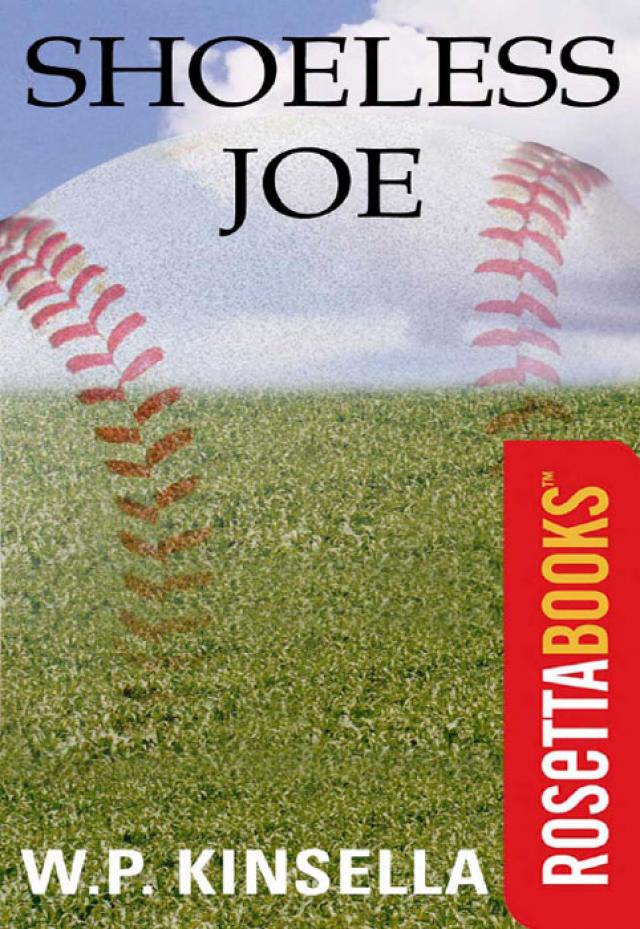
Ray Kinsella is sitting quietly on the back porch of his Iowa farm one evening when he hears the ghostly voice of a baseball announcer who says to him, "If you build it, he will come." Needing no further explanation, Kinsella immediately sees in his mind's eye a baseball field that he is being asked to create in the middle of a corn field. The voice will speak only two other things to Ray: "Ease his pain" and "Go the distance," and yet the dreaming, idealistic man knows just what he is supposed to do. He knows that digging up the corn field in the back of his house will inspire the return of baseball legend Shoeless Joe Jackson, a man whose reputation was forever tarnished by the scandalous 1919 World Series. So opens the award-winning novel by W.P. Kinsella which was the inspiration for the incredibly popular film Field of Dreams starring Kevin Costner.W.P. Kinsella has been called a great writer of baseball novels but this title transcends that description. Kinsella doesn't...
Read online
  • 61
Chieftains

Chieftains

Robert Forrest-Webb Bob

Robert Forrest-Webb Bob

During the late 1970s and early 80s tension in Europe, between east and west, had grown until it appeared that war was virtually unavoidable. Soviet armies massed behind the ‘Iron Curtain’ that stretched from the Baltic to the Black Sea. In the west, Allied forces, British, American, and armies from virtually all the western countries, raised the levels of their training and readiness. A senior British army officer, General Sir John Hackett, had written a book of the likely strategies of the Allied forces if a war actually took place and, shortly after its publication, he suggested to his publisher Futura that it might be interesting to produce a novel based on the Third World War but from the point of view of the soldier on the ground. Bob Forrest-Webb, an author and ex-serviceman who had written several best-selling novels, was commissioned to write the book. As modern warfare tends to be extremely mobile, and as a worldwide event would surely include the threat of atomic weapons, it was decided that the book would mainly feature the armoured divisions already stationed in Germany facing the growing number of Soviet tanks and armoured artillery. With the assistance of the Ministry of Defence, Forrest-Webb undertook extensive research that included visits to various armoured regiments in the UK and Germany, and a large number of interviews with veteran members of the Armoured Corps, men who had experienced actual battle conditions in their vehicles from mined D-Day beaches under heavy fire, to warfare in more recent conflicts. It helped that Forrest-Webb’s father-in-law, Bill Waterson, was an ex-Armoured Corps man with thirty years of service; including six years of war combat experience. He’s still remembered at Bovington, Dorset, still an Armoured Corps base, and also home to the best tank museum in the world. Forrest-Webb believes in realism; realism in speech, and in action. The characters in his book behave as the men in actual tanks and in actual combat behave. You can smell the oil fumes and the sweat and gun-smoke in his writing. Armour is the spearhead of the army; it has to be hard, and sharp. The book is reputed to be the best novel ever written about tank warfare and is being re-published because that’s what the guys in the tanks today have requested. When first published, the colonel of one of the armoured regiments stationed in Germany gave a copy to Princess Anne when she visited their base. When read by General Sir John Hackett, he stated: “A dramatic and authentic account”, and that’s what ‘Chieftains’ is.
Read online
  • 60
Helliconia Spring h-1

Helliconia Spring h-1

Brian Aldiss

Science Fiction & Fantasy / Literature & Fiction / Poetry

This is the first volume of the Helliconia Trilogy— a monumental sage which goes beyond anything yet created by this master among today’s imaginative writers. An entire solar system is revealed, and with it a world disturbingly reflecting our own, Helliconia: an Earth-like planet where dynasties change with the seasons. Events and characters and animals stream across the pages of this gigantic novel. Cosmic in scope, it keeps an eye lovingly on the humans involved. So the 5,000 inhabitants of the Earth’s observation station above Helliconia keep their eyes trained on the events of Oldorando and may long to intervene though the dangers are too great. So we on Earth have them all in our vision in one of the most consuming and magnificent novels of scientific romance. Won BSFA Award for Best Novel in 1982. Won John W. Campbell Memorial Award in 1983. Nominated for the Nebula Award for Best Novel in 1983. Note: British spelling.
Read online
  • 59
183